
The global race for tech talent puts regions like Latin America and India under the spotlight, but...
Outsourcing IT services is no longer a tactical move; it’s a strategic lever for growth, innovation, and agility. In 2026, the outsourcing conversation will be shifting from cost-cutting to value creation. While traditional offshoring destinations like India remain relevant, nearshoring to Latin America is rapidly emerging as the preferred model for companies seeking real-time collaboration, cultural alignment, and workforce stability.
This guide presents a practical roadmap for decision makers evaluating IT outsourcing, with an emphasis on why nearshoring in Latin America, and partners like EvolutionCode.io, is reshaping the global tech landscape.
Why Outsourcing Is Still a Strategic Priority in 2026
Global outsourcing is forecasted to surpass $525 billion by 2030, driven not just by cost optimization, but by the need for flexible, tech-enabled, human-centered operations (Forbes Tech Council, 2025). CEOs and CTOs are seeking partners that can offer both cutting-edge skills and seamless collaboration.
Among the key shifts:
- Hybrid outsourcing models blending nearshore talent with local leadership
- AI-powered solutions that require human oversight (HITL – Human in the Loop)
- Outsourcing as a driver of speed-to-market and innovation—not just savings
Outsourcing Models: What CEOs Need to Know
| Model | Description | Pros | Cons |
| Offshoring | Delegating work to distant regions (e.g., India, Philippines) | Low labor cost | Time zone gaps, retention issues |
| Onshoring | Outsourcing within your own country | Easy coordination | High cost |
| Nearshoring | Outsourcing to nearby countries (e.g., LATAM) | Real-time collaboration, cultural fit | Slightly higher cost than offshore |
Veredict: In 2026, nearshoring offers the best balance of quality, control, and cost-effectiveness.
Why Latin America Outperforms India in Nearshoring
Backed by the latest EF English Proficiency Index and INSEAD Global Talent Competitiveness Index, Latin America leads in key outsourcing success factors:
| Metric | Argentina | Colombia | Mexico | India |
| English Proficiency Rank (EF EPI) | 26 | Moderate | Moderate | 74 |
| Talent Attraction Rank (INSEAD GTCI 2023) | 63 | 70 | 98 | 132 |
| Time Zone Alignment (with US ET) | +1 hr | Same | -1 hr | +9.5 hrs |
| External Openness Score | 40.5 | 44.3 | 31.3 | 21.4 |
What this means:
- Clearer communication
- Faster decision-making
- More productive developer engagement
- Easier onboarding and knowledge transfer
2025 English Language EF Index Global Ranking of Countries and Regions
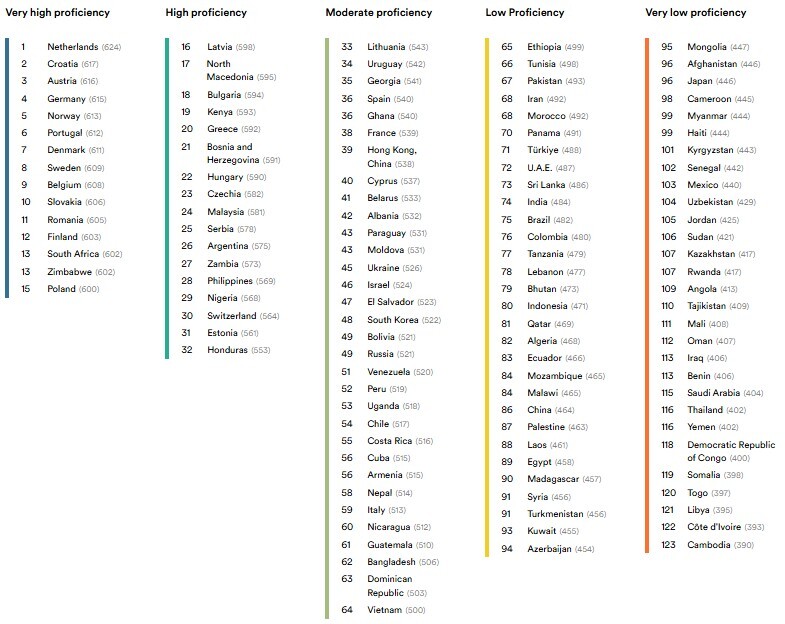
Source: https://www.ef.com/wwen/epi/
Time Zone Comparison Table
| Country | Time Zone | Time Difference with U.S. (ET) |
| Argentina | Argentina Time (ART) | +1 hour |
| Colombia | Colombia Time (COT) | Same (ET) |
| Mexico | Central Time (CT) | -1 hour |
| India | India Standard Time (IST) | +9.5 hours |
Workforce Stability: The Salary Myth of Latinamerica vs India
While Indian developers have slightly lower hourly rates, the hidden costs, like high turnover, time zone friction, and lack of paid benefits, erode perceived savings. Latin America’s competitive wages come with better labor protections and higher retention, leading to fewer delays, less retraining, and better delivery outcomes.
| Role | Argentina | Colombia | Mexico | India |
| Senior Java Dev | 1.6x | 1.5x | 1.6x | x=1.0 |
| Junior React Dev | 0.95x | 0.95x | 0.95x | x=1.0 |
Custom Development: The EvolutionCode.io Approach
At EvolutionCode.io, we combine nearshoring with custom development services to offer high-impact teams for:
- React & React Native
- Java & .NET development
- Python & AI-powered data solutions
- Full lifecycle staff augmentation
Our engineers are embedded within your workflow, working in your time zone, using your tools, and communicating as part of your core team.
Human logic meets custom AI.
We design solutions that blend advanced tech with strategic oversight—because automation without understanding creates more problems than it solves.
Key Considerations When Choosing a Nearshoring Partner
- Cybersecurity & Compliance: Especially in regulated industries
- Talent Retention: Vital for long-term software projects
- Real-Time Collaboration: Avoid asynchronous chaos
- Ethical Practices: ESG standards now matter to investors and clients
- Scalability: Can the partner evolve with your business?
What’s Next in Outsourcing (2026 Trends)
Based on Forbes insights, the future of outsourcing lies in:
- Hybrid delivery models (local PM + nearshore devs)
- AI-powered workflows (OCR, LLMs, automation)
- Human-in-the-loop support for AI deployments
- Greater demand for ethical and sustainable partners
- Strategic, not transactional, partnerships
Outsourcing isn’t about saving money anymore—it’s about gaining time, capacity, and clarity.
Conclusion: A New Standard for Strategic Growth
In 2026, outsourcing is no longer about doing more for less. It’s about doing better, faster, and smarter—with the right people, in the right place, at the right time.
Latin America stands out not just for affordability, but for alignment—in culture, in skills, in mindset.
EvolutionCode.io is here to help you build cross-border teams that feel in-house. From day one. Let’s explore how nearshoring and custom development can accelerate your roadmap.
References:
- Forbes Business Council (2025). A Look Ahead: 2025 Outsourcing Trends.
- Forbes Tech Council (2025). The Future of Outsourcing: 2025 Perspectives on Global Collaboration.
- EF EPI 2025